Pure Tone Audiometry
PURE TONE AUDIOMETRY
A Test to Measure Hearing Sensitivity
Pure Tone Audiometry (PTA) is a non-invasive, gold-standard diagnostic test used to evaluate an individual's hearing ability. It measures how well a person can detect sounds at various frequencies and volumes.
This test is fundamental in identifying the type and degree of hearing loss, enabling our specialists to recommend personalized solutions such as hearing aids or medical treatments. PTA is suitable for individuals of all ages, from children to the elderly.
TESTING METHODS
Six Major Approaches Used
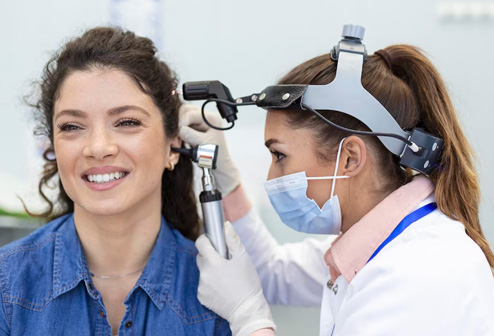
PTA comprises multiple testing techniques, each tailored to assess different components of the auditory system. These variations help in producing an accurate and comprehensive hearing profile for every patient.
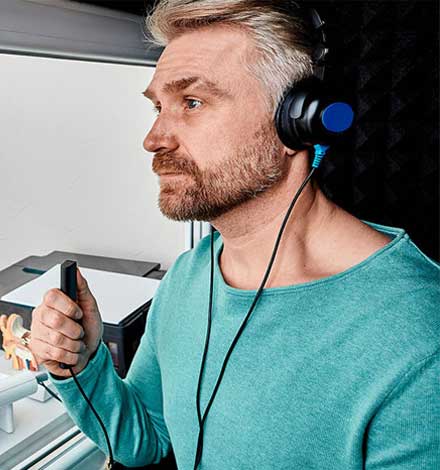
Air Conduction Test
Evaluates hearing by transmitting tones through headphones over the ears.
Bone Conduction Test
Assesses inner ear response by placing a vibrator on the mastoid bone behind the ear.
Speech Audiometry
Tests speech understanding by having the patient repeat words at varying volumes.
High-Frequency Audiometry
Detects hearing loss at higher pitches, often missed in standard tests.
Unmasked Testing
Evaluates both ears together, without isolating one from the other.
Masked Testing
Uses noise to isolate each ear and test it independently with higher accuracy.
TEST PROCEDURE
Step-by-Step Process
The Pure Tone Audiometry test is carried out in a quiet, sound-treated room using specialized audiometric equipment. This controlled environment ensures precision in capturing hearing thresholds. Here’s how the process unfolds.
 Patient Preparation
 Air Conduction Testing
 Bone Conduction Testing
 Speech Audiometry
 Masking Process
 Result Analysis
DIAGNOSTIC VALUE
Detects Hearing Loss Causes
Pure Tone Audiometry helps in diagnosing hearing loss across different types—conductive, sensorineural, or mixed. It reveals the severity of hearing impairment and pinpoints whether the problem lies in the outer, middle, or inner ear.

Early Detection
Identifies hearing issues before they become severe, enabling early intervention and treatment.
Treatment Planning
Assists audiologists in recommending appropriate hearing aids or medical/surgical options.
Hearing Monitoring
Tracks hearing changes over time, useful for chronic or progressive conditions.
Type Differentiation
Accurately distinguishes between types of hearing loss for better-targeted care.
WHY CHOOSE US
Excellence in Diagnostics
We are committed to maintaining the highest standards in hearing diagnostics. From advanced testing equipment to experienced audiologists, we ensure every patient receives care that is accurate, respectful, and reassuring.
Modern Equipment
We use advanced diagnostic machines that deliver accurate and consistent hearing test results.
Certified Audiologists
Our audiologists are ISO-certified professionals and well experienced in diagnosing hearing conditions.
Hygienic Environment
Our testing rooms are thoroughly sanitized, sound-treated, and designed for patient comfort.
Quick Report Delivery
Receive your detailed hearing test results within 24 hours for faster diagnosis.
Frequently Asked Questions
Your Questions, Our Answers
Questions about hearing? We’ve got the answers — from our experts at Hearingg Clinic, Trichy.
Pure Tone Audiometry is used to determine the softest sounds a person can hear at different frequencies. It’s essential in identifying hearing loss type and severity. The results help audiologists create a personalized care plan, whether it involves hearing aids, medical treatment, or further testing to improve hearing health and overall quality of life.
Not at all. Pure Tone Audiometry is completely safe, painless, and non-invasive. The test involves sitting in a quiet room, wearing headphones, and pressing a button when you hear tones. It’s a stress-free process that doesn’t involve any discomfort and is suitable for people of all ages, including children and older adults.
The Pure Tone Audiometry test usually takes between 20 and 30 minutes. However, the exact time may vary depending on the number of tests performed, including air conduction, bone conduction, and speech audiometry. Our audiologists ensure the process is smooth, efficient, and as brief as possible without compromising accuracy or comfort.
Yes, children can safely undergo Pure Tone Audiometry. We use child-friendly techniques such as play audiometry to ensure cooperation and accurate results. Our experienced audiologists are skilled at working patiently with children, making the process easy, gentle, and reassuring for both kids and their parents during the evaluation.
No special preparation is required before a Pure Tone Audiometry test. Just make sure your ears are clean and let the audiologist know about any ear pain, infections, or recent symptoms. You may eat, drink, and follow your usual routine before the test—no restrictions are necessary for accurate results.
Ready to Check Your Hearing Health?
Starting your hearing test is quick, easy, and essential. Book now to get expert insights and personalized care tailored to your hearing needs.
- FOR APPOINTMENTS: +91 80155 99556
- OR
- DROP US AN EMAIL: wecare@hearinggclinic.com
Schedule Your Test!
Fill in your details to confirm appointment.